Food Bloggers vs. Local Creators: What Actually Brings Customers to Your Pittsburgh Restaurant
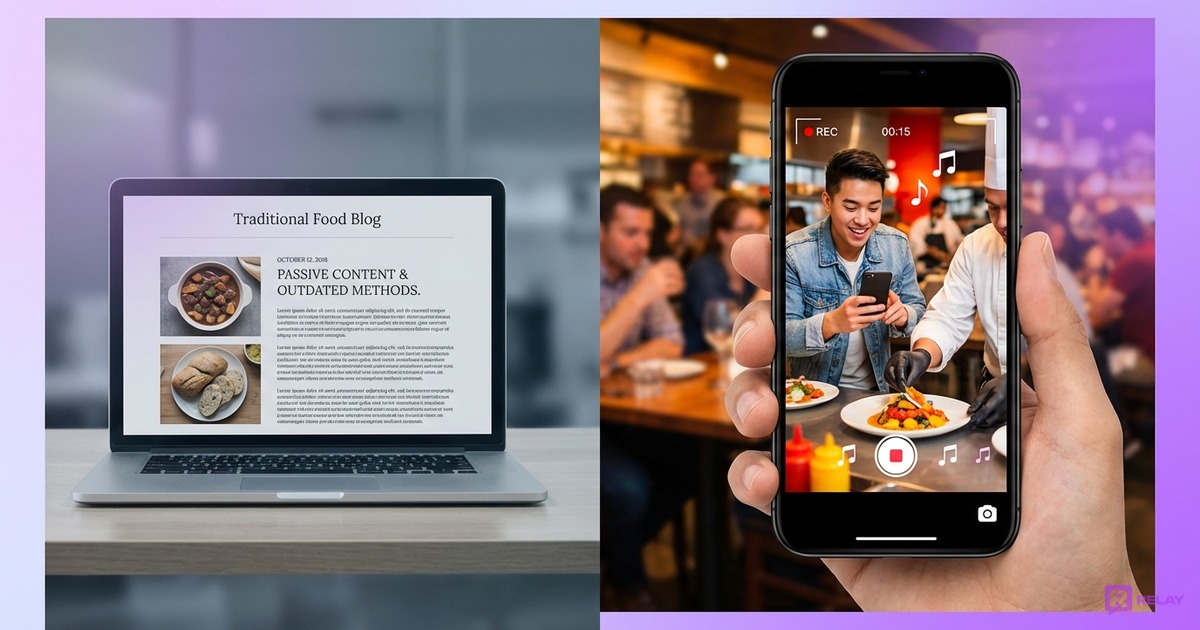
You Had a Food Blogger Visit. Nothing Happened.
It sounded like a great idea. A food blogger with a big following came to your Pittsburgh restaurant. They took gorgeous photos. Wrote 1,500 words about your pasta. Posted it to their site.
You checked your reservation book the next week. Nothing changed.
No spike in covers. No one mentioned the blog post. Your phone didn't ring more than usual. You're not imagining it. This is the experience most restaurant owners have with traditional food bloggers.
The visit looked great on paper. But nobody walked through the door.
Here's why. And here's what actually works instead.
The Food Blogger Trap
Food bloggers built their audiences on long-form written content. A recipe post. A restaurant review. A "top 10 brunch spots" roundup. That model worked when people searched Google for "best restaurants in Pittsburgh" and clicked on blog articles.
That's not how people discover restaurants anymore.
Today, 30% of Gen Z find new restaurants on Instagram. Another 21% discover them on TikTok. They're scrolling short-form video, not reading 2,000-word blog posts. The discovery channel shifted. Most food bloggers didn't shift with it.
There's a bigger problem. A food blogger with 100,000 readers sounds impressive. But where do those readers live? Everywhere. Their audience is scattered across the country. Maybe 2% live close enough to actually visit your restaurant. The other 98% will never set foot in your dining room.
You're paying for national reach when you need local customers.
Geography Is Everything
This is the part most restaurant owners miss. Audience size doesn't matter if the audience lives in the wrong zip code.
A local creator with 5,000 followers in Pittsburgh is worth more to your restaurant than a food blogger with 200,000 followers nationwide. Because those 5,000 people can actually drive to your front door on a Friday night.
When a local creator posts about your restaurant, their followers recognize the neighborhood. They know the street. They've walked past your window. The post doesn't feel like a sponsored ad from someone they'll never meet. It feels like a friend saying, "Go try this place."
That's the difference between impressions and reservations.
Local creators consistently outperform bigger names for exactly this reason. Their audience is concentrated in the one geography that matters to your business. Yours.
Short-Form Video Beats Blog Posts
Let's talk format. A food blogger writes a review. It sits on their website. Someone might find it through a Google search six months from now. Maybe.
A local creator films a 30-second Reel walking into your restaurant, trying your signature dish, reacting honestly. They post it that night. It hits their followers' feeds immediately. It gets shared. Saved. Stitched. Duetted.
Short-form video is how people discover restaurants now. Not blog posts. Not static photos. Video.
And here's the real advantage. Video content has a longer shelf life on social platforms than most people think. A good Reel or TikTok can resurface weeks later through the algorithm. It keeps working for you long after the creator leaves.
A blog post buried on page three of Google? That's not working for anyone.
Creators Leave Reviews. Bloggers Don't.
Here's something restaurant owners overlook. When a food blogger visits, you get a blog post. That's it. No Google review. No Yelp review. Just content on their platform that you don't own or control.
Local creators do something different. They leave real Google reviews. Detailed, authentic reviews with photos, specific menu items, and genuine opinions. These reviews boost your Google Business profile. They help you rank higher in local search. They give future customers the social proof they need to choose you over the place next door.
A steady stream of fresh, authentic Google reviews is one of the most powerful things you can do for your restaurant's visibility.
Food bloggers don't give you that. Local creators do. Every single visit.
It Costs Less and Works Better
Let's talk numbers. User-generated content from local creators gets 4x higher click-through rates than polished branded content. Four times. That means more people actually tap through to your profile, your menu, your reservation link.
UGC also costs 30% to 80% less than traditional influencer content or professional photo shoots. You're spending less and getting content that performs better. That's not a tradeoff. That's just smarter marketing.
When you work with a food blogger, you're usually paying for a single piece of content on their platform. When you work with local creators, you get social posts, Google reviews, and content you can repurpose on your own feeds. Three touchpoints from one visit.
More touchpoints. More visibility. Less money. The math makes sense.
What This Looks Like in Practice
Relay connects Pittsburgh restaurants with local creators who actually live here. Our network has 250+ creators with a combined reach of 131K accounts and 339K Reel views.
Here's how it works. A creator books a visit through Relay. They come in as a regular customer. No scripts. No awkward photo shoots. They eat, they enjoy the experience, they create content about it. Then they post a Reel or TikTok and leave an honest Google review.
You get authentic social content, local reach, and fresh reviews. All from one visit. Plans start at $99/month.
No contracts with individual bloggers. No negotiating rates. No wondering if anyone who sees the content will ever actually show up at your restaurant.
The Shift Is Already Happening
Pittsburgh restaurant owners are figuring this out. The ones filling tables aren't chasing food bloggers with huge followings. They're working with local creators who have small, loyal, hyper-local audiences.
The food blogger model wasn't built for local businesses. It was built for pageviews. For affiliate links. For advertising revenue on someone else's website.
Your restaurant doesn't need pageviews. It needs people in seats. Ordering food. Leaving reviews. Telling their friends.
That's what local creators deliver.